
Rongai Route
The Rongai Route is your gateway to the majestic Kilimanjaro from the quieter northern side. It is often regarded as the second-easiest route after Marangu, with a relatively gentle gradient and fewer crowds, especially in the early days. The 7-day itinerary includes a valuable extra acclimatisation day at Mawenzi Tarn.
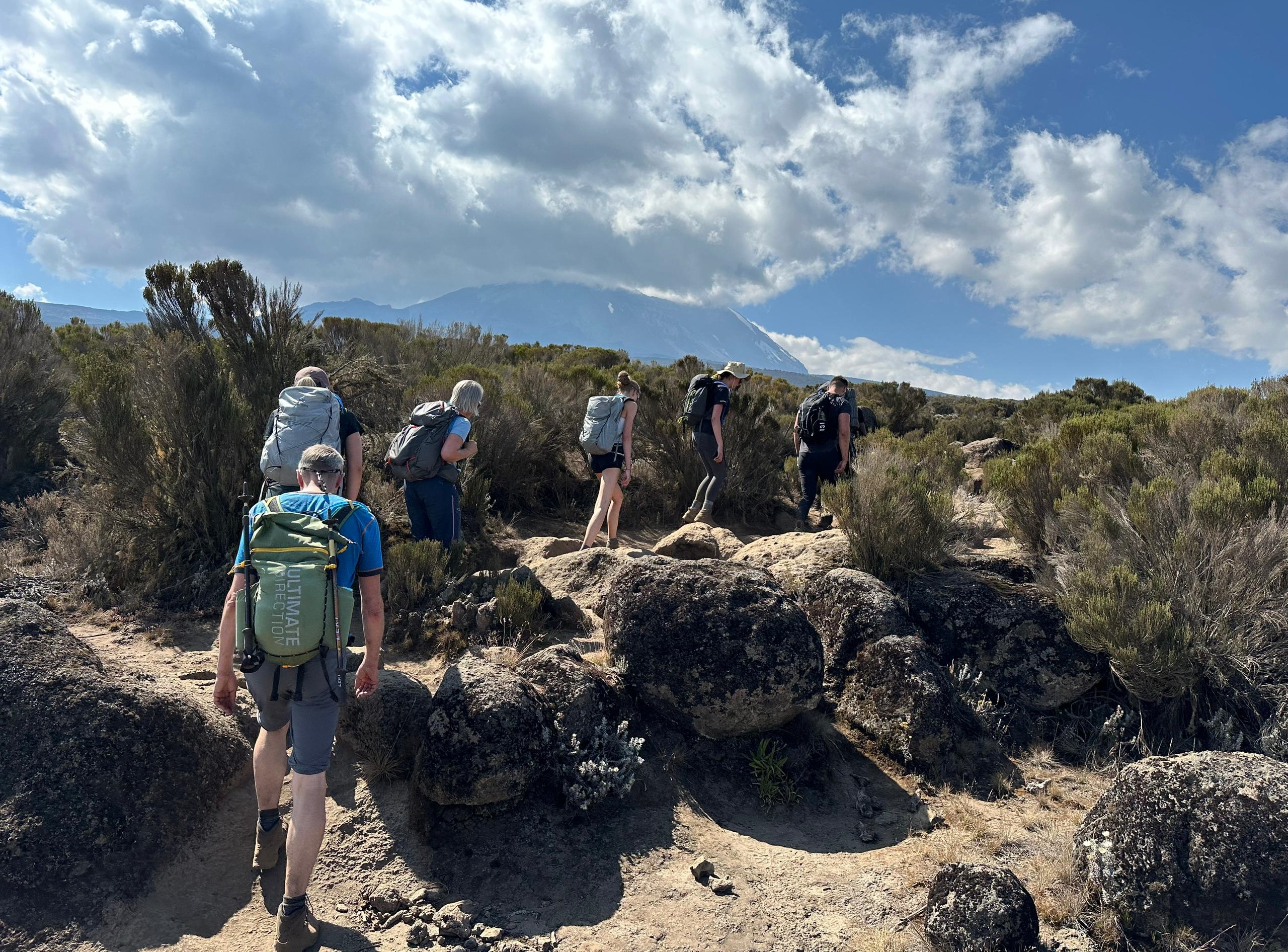
7 Days Rongai Route
You can start from either the Tanzania or Kenya side. The route climbs steadily through forest, moorland and alpine desert, reaches the spectacular Mawenzi Tarn, crosses the saddle to Kibo, and summits via Gilman’s Point before descending the Marangu Route.
What to Expect on the Trek
Quiet northern start
Rongai is one of the least used routes, so the first few days are often quieter than the southern approaches.
Mawenzi Tarn acclimatisation
The extra day at Mawenzi Tarn (4,330 m) under the dramatic spires of Mawenzi Peak greatly helps the body adapt.
Views of Kenya & Mawenzi
Early camps offer wide views over the Kenyan plains, and the cirque at Mawenzi Tarn is one of the most scenic spots on the mountain.
Descent via Marangu
You finish on the classic Marangu Route, seeing Kilimanjaro from the south side as well.
Rongai 7 Days Quick Facts
| Route type | Camping route approaching from the north |
|---|---|
| Duration | 7 days on the mountain plus arrival day |
| Start | Rongai Gate (≈ 1,950 m) |
| Finish | Marangu Gate |
| Summit | Uhuru Peak, 5,895 m (19,341 ft) |
| Accommodation | Private four-season mountain tents |
| Key acclimatisation | Extra day at Mawenzi Tarn (4,330 m) |
| Technical skills | None required |
Explore the Detailed Itinerary
Day 0Arrival in Tanzania
Arrive at Kilimanjaro International Airport (JRO), where you will meet a Kilimanjaro Joyful Adventures representative and transfer to your hotel. The hotel provides all the essentials for a comfortable stay, and your guide will brief you and check your gear.
Day 1Moshi to Rongai Gate to Simba Camp
After an early breakfast you transfer through villages and coffee plantations (2–3 hours) to Rongai Gate (1,950 m). After registration and preparing the porters you hike through fields of maize and potatoes, then enter montane forest. The trail climbs gently but consistently until you reach Simba Camp (2,600 m) with fantastic views over the Kenyan plains.
Day 2Simba Camp to Kikelewa Camp
After breakfast a steady ascent takes you to the Second Cave for lunch. You then leave the direct trail and strike out across the moorland on a smaller path toward Mawenzi, arriving at Kikelewa Camp in a sheltered valley for dinner and overnight.
Day 3Kikelewa Camp to Mawenzi Tarn Hut
A short, steep climb up grassy slopes is rewarded by superb all-round views. Soon you leave the vegetation behind and arrive at Mawenzi Tarn Camp, situated in a spectacular cirque directly beneath the towering spires of Mawenzi Peak. Lunch, rest, dinner and overnight here.
Day 4Acclimatisation Day at Mawenzi Tarn
This is your extra day on the mountain. You spend a second night at Mawenzi Tarn. An optional hike toward Mawenzi Peak provides excellent acclimatisation before returning to camp for lunch, dinner and overnight.
Day 5Mawenzi Tarn to Kibo Hut
After an early breakfast you cross the lunar landscape of the saddle between Mawenzi and Kibo to reach Kibo Hut at the bottom of Kibo’s crater wall. The rest of the day is spent resting and preparing for the midnight summit attempt.
Day 6Summit Day: Kibo Hut to Uhuru Peak to Horombo Hut
Wake around midnight for a light breakfast and begin the summit ascent. Climb steep scree (or snow) to Gilman’s Point on the crater rim (≈ 5,861 m), then continue along the rim to Uhuru Peak (5,895 m). After celebrating and taking photos, descend to Kibo Hut for a rest and lunch, then continue across the saddle to Horombo Hut for dinner and overnight.
Day 7Horombo Hut to Marangu Gate to Hotel
After breakfast continue the descent through moorland to Mandara Hut for lunch, then through lush forest to Marangu Gate. After signing out, a vehicle takes you back to your hotel in Moshi for certificate presentation and celebration.
Elevations, distances and times are approximate and can change with weather and group pace.
Camps and Altitude at a Glance
| Night | Camp | Approx. altitude |
|---|---|---|
| 1 | Simba Camp | 2,600 m / 8,530 ft |
| 2 | Kikelewa Camp | 3,600 m / 11,810 ft |
| 3 | Mawenzi Tarn Hut | 4,330 m / 14,206 ft |
| 4 | Mawenzi Tarn Hut (acclimatisation) | 4,330 m / 14,206 ft |
| 5 | Kibo Hut | 4,695 m / 15,400 ft |
| 6 | Horombo Hut (after the summit) | 3,720 m / 12,205 ft |
Price Includes & Excludes
Includes
- Quality, waterproof, four-season private mountain sleeping tents
- Professional, experienced mountain guides
- All park fees
- Airport transfers
- Rescue fees
- All meals while on the mountain
- Guides, porters and cook salaries and park fees
- Quality mess tents with table and chairs
- Large portions of fresh, healthy, nutritious food
- Clean, purified drinking water
- Oximeter
- Medical kit
- Emergency oxygen
- Crisis management and safety procedures
- Fair and ethical treatment of porters
- 2 nights’ accommodation in Moshi/Arusha before and after the climb
Excludes
- Flights
- Alcoholic and soft drinks
- Visa fees
- Tips and personal spending money for souvenirs, etc.
- Travel insurance
Read our booking terms and check the Tanzania visa guide before you travel.
How to Prepare for the Rongai Route
Train for longer days
Day 2 is the longest (≈ 17 km). Practise hiking with a daypack and break in your boots well before travel.
Pack for every climate
You move from forest and moorland to alpine desert and arctic summit conditions. See our equipment and gear list.
Go slowly
Drink plenty of water, walk at a steady “pole pole” pace and tell your guide about any symptoms. Read about safety on Kilimanjaro.
Choose your season
The dry seasons (January–mid-March and June–October) usually give the best conditions. See the best time to trek.
Rongai 7 Days: Frequently Asked Questions
Why choose the 7-day Rongai route?
The 7-day version includes an extra acclimatisation day at Mawenzi Tarn, which improves summit success rates compared with the shorter 6-day itinerary.
Is Rongai one of the easier routes?
Yes. Rongai is often considered the second-easiest route after Marangu, with a relatively gentle gradient, especially in the early days.
Where does the Rongai route start?
The trail starts at Rongai Gate (about 1,950 m) on the northern side of Kilimanjaro near the Kenyan border. The drive from Moshi takes 2–3 hours.
Can I start from the Kenya side?
Yes. The route can also be accessed from the Kenyan side. Copies of passports are required in advance for border formalities.
Do we sleep in tents or huts?
On this itinerary you sleep in quality four-season private mountain tents at the designated campsites (including Mawenzi Tarn and Kibo).
What is not included in the price?
Flights, alcoholic and soft drinks, visa fees, tips and personal spending money for souvenirs, and travel insurance are not included.